
BudE
09/21 - present

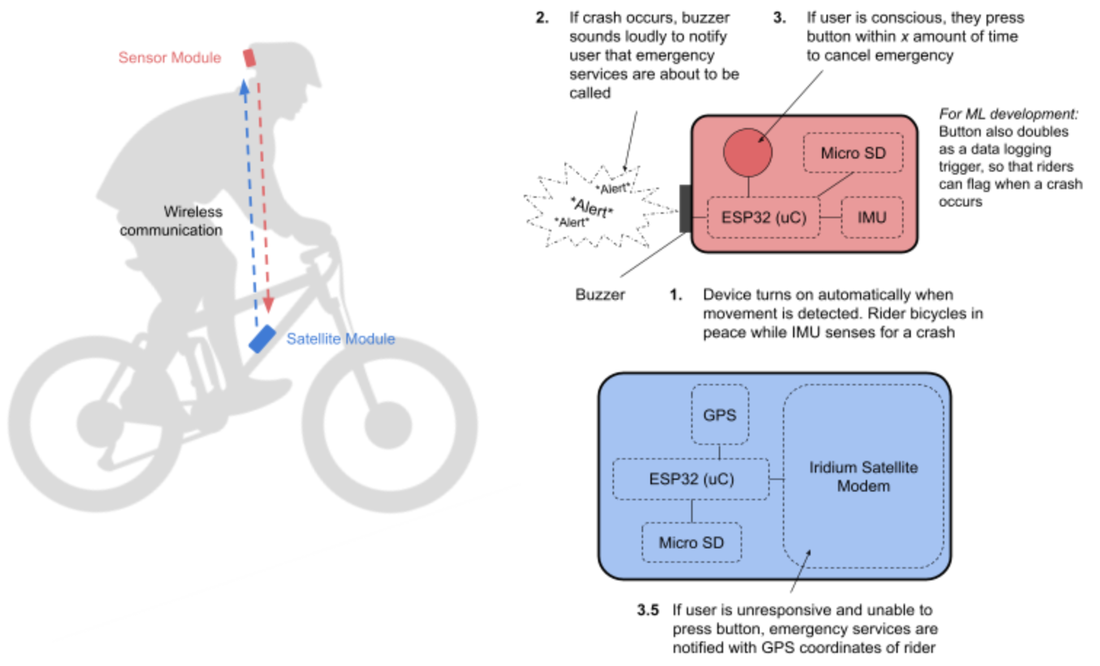
BudE is a crash detection system I designed to keep cyclists safe while in the deep outdoors. It accomplishes this by constantly sensing for crashes, and notifying emergency personnel via satellite communication if someone is unresponsive.
I developed BudE as a personal motivation after noticing how dangerous it is to mountain bike alone. A few crash detection devices exist on the market already, but they are flawed in many ways to the point of uselessness. The main problems I wanted to solve with my design were as follows:
unreliable crash flagging
useless in areas that don’t have cellular service
clumsy interface
It is currently under development after receiving its second round of funding from the Innovation Catalysts grant program.
-
All cyclists accept, to some extent, the fact that they will fall some day. No one knows when that’ll happen, or how bad it'll be, but it’s certain that it will occur. That's why cyclists wear helmets and pads and ride with buddies. There are times (quite frequently), though, that they can't wrangle together a crew to ride with but go out nonetheless because they love the sport. There are also times (unfortunately so) where helmets and pads aren't capable of fully protecting them. Compounded with often nonexistent cell service where cyclists are riding, these people can find themselves to be quite helpless, left to the mercy of the wilderness.
The goal of BudE is to minimize the danger of these situations by acting as a smart “buddy” device and calling for help when the outdoor enthusiast can’t. BudE aims to address these problems using refined algorithms, novel technology, and satellite communication to effectively, and reliably, get emergency response to victims as soon as possible. With serious traumatic brain injuries - which are the most common culprit for a loss of consciousness - it is imperative that help is found promptly.
Skills utilized:
Microcontroller use and custom electronics
Programming
Firmware programming (C++)
Event detection algorithm (C++ and Matlab)
Data analysis (Matlab)
3D dynamics
CAD (Fusion 360)
EAGLE (for custom PCB development)
3D Printing (FDM and SLA)
CAM and CNC (for custom PCB development)
Design and Manufacturing
First Iteration
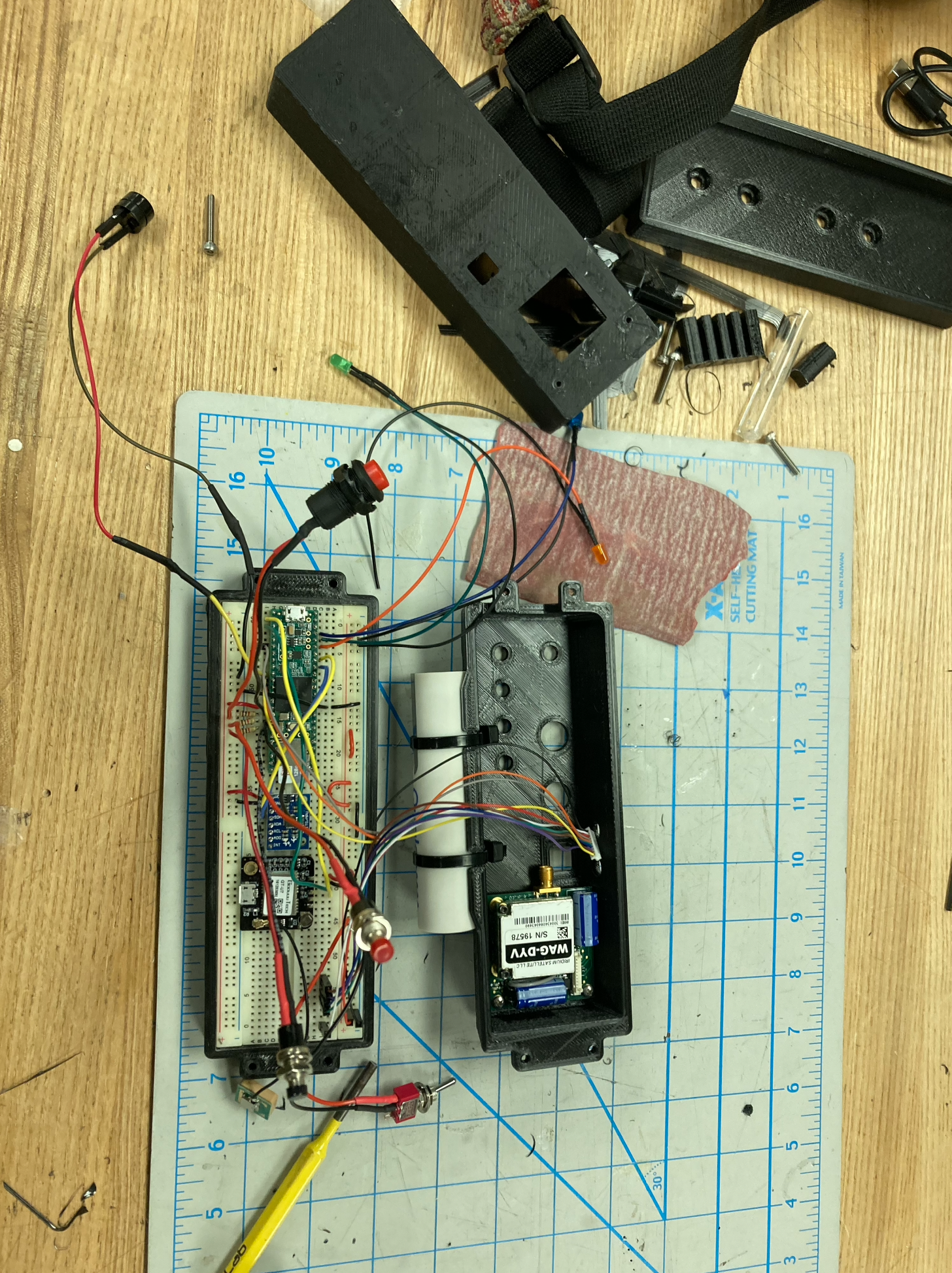
The initial prototype of this device was designed to mount on the frame of the bike. This would allow an entire breadboard to fit inside, as well as all of the components, for quick and easy development. This worked really well as an initial proof of concept, but there was still lots of room for improvement.


Second Iteration (current)
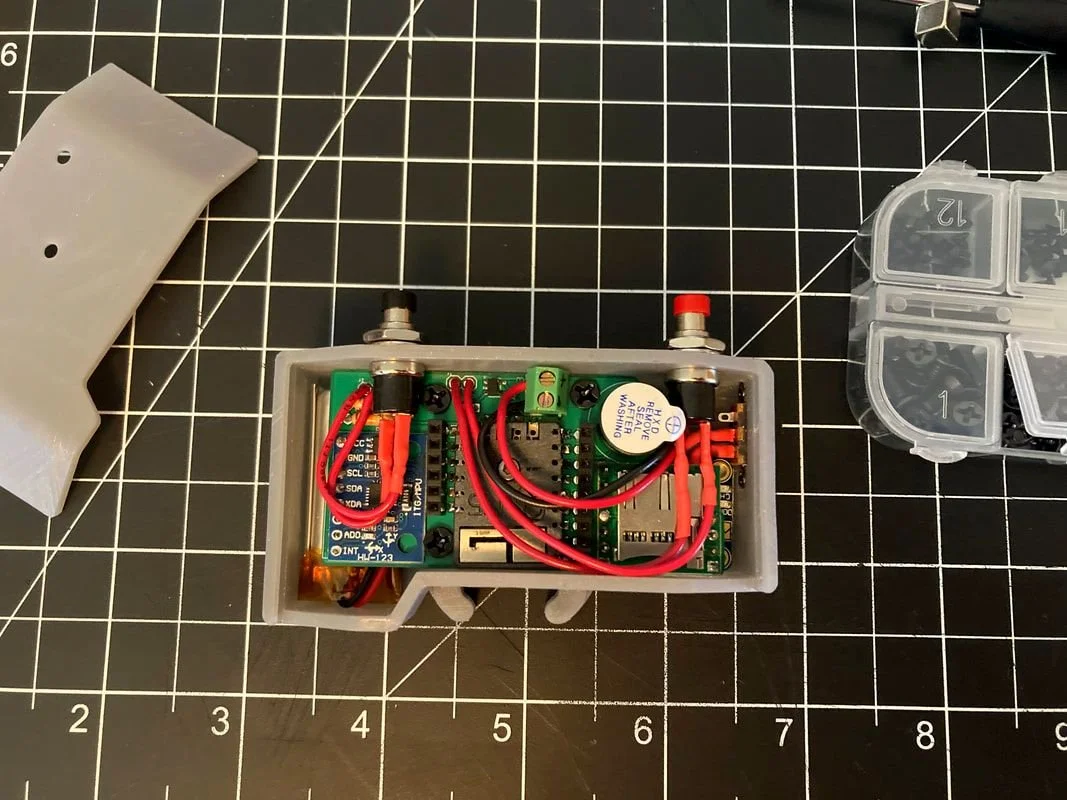
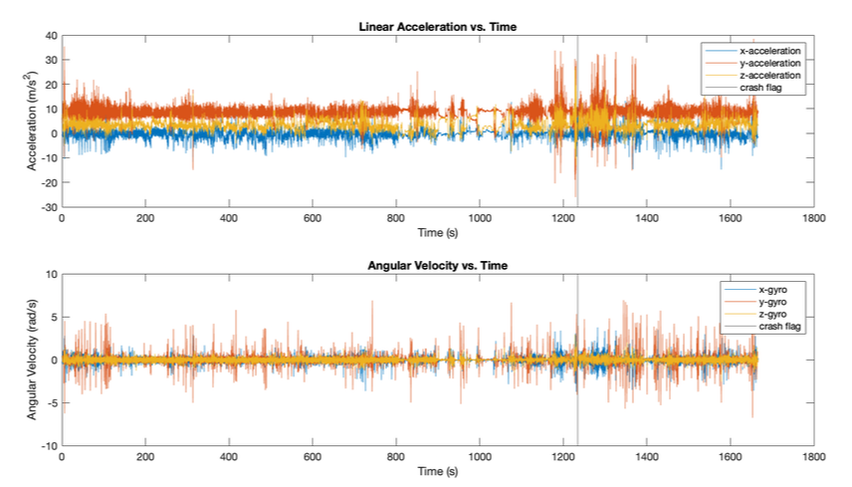
Current development of the project is focused on making the device smaller, improving the algorithm, and moving it to the helmet for more meaningful data (IMU readings from the frame of the bike give lots of noise). I've created a sensor board that mounts to the helmet, and given a few to friends for data collection. By analyzing this IMU data, I've been able to use dynamics theory to develop an algorithm that can distinguish a crash from normal riding. My goal is to collect enough data and crash events to train a Machine Learning algorithm to do the same thing. With enough well-collected data, an ML algorithm should be much more accurate at detecting crashes.
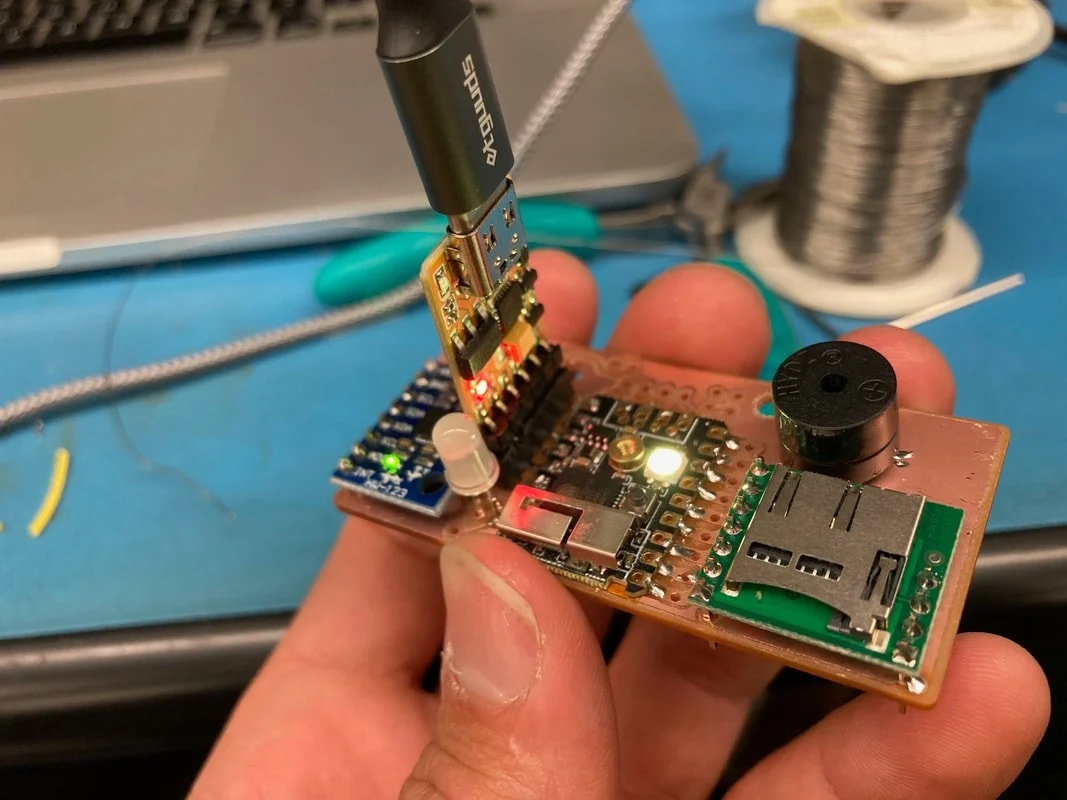
Testing first board from CNC mill
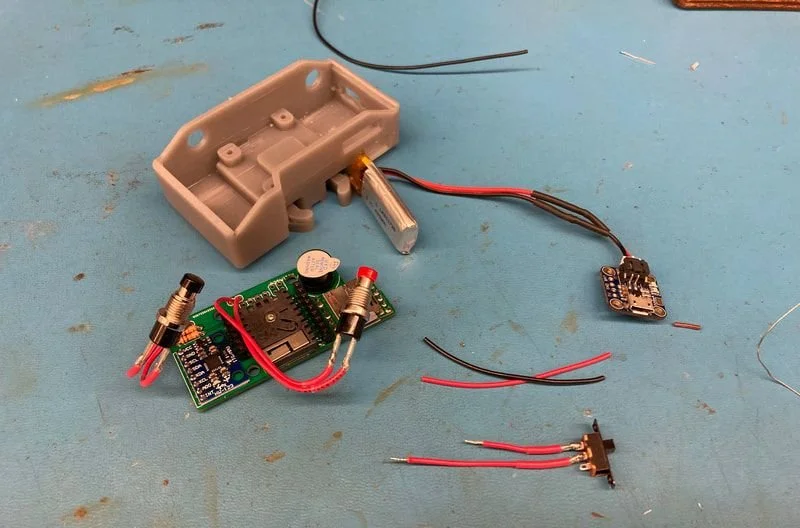
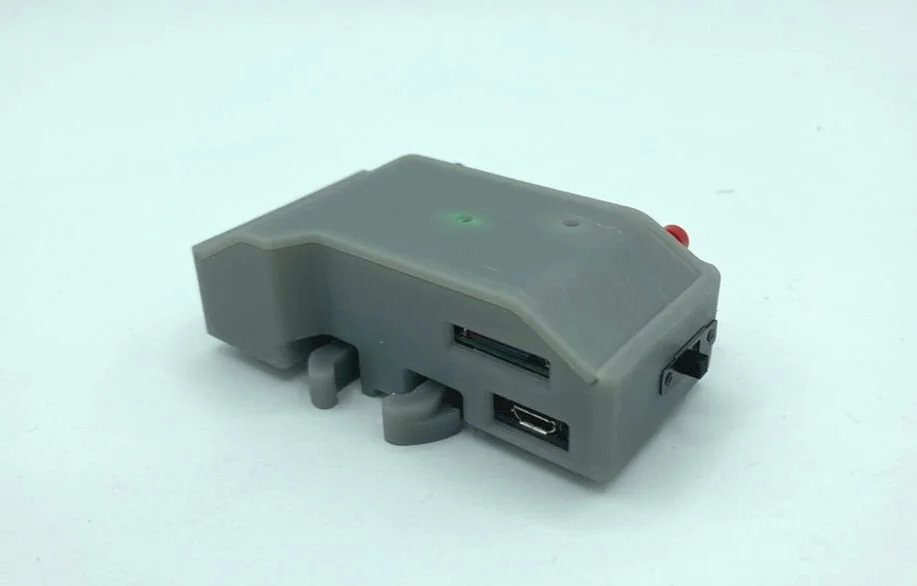
Step 2: cutting the shape
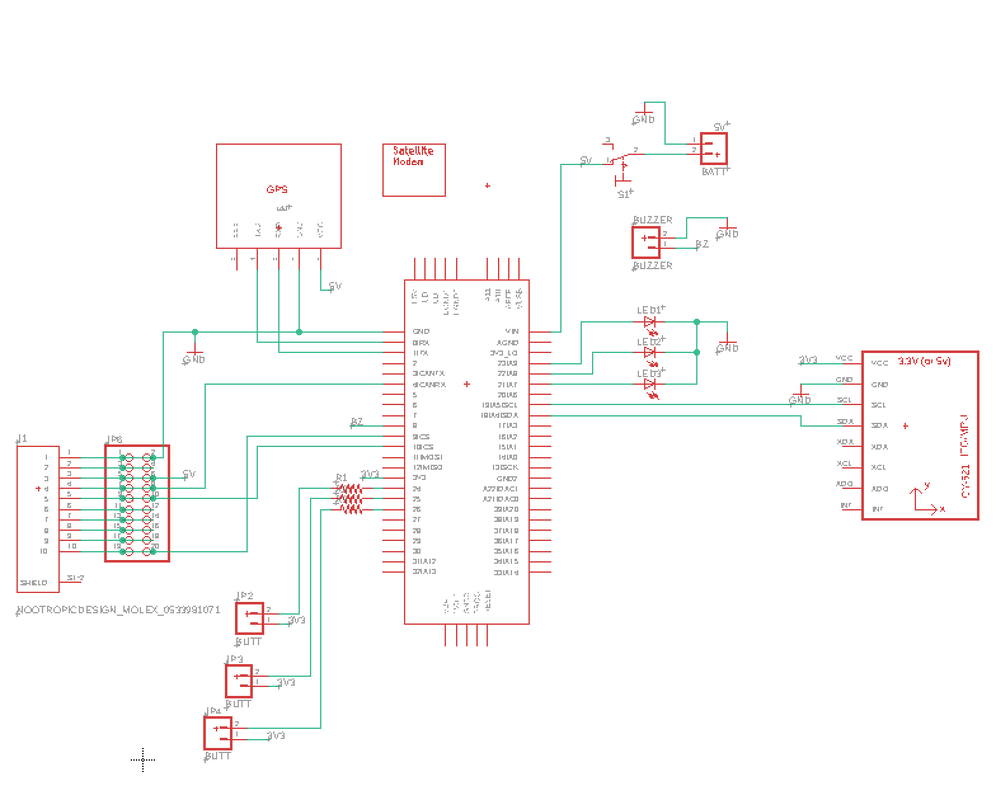
The next steps for this project are to re-incorporate the satellite and GPS modules into a singular device. I currently have two ESP32 devices working in tandem through WiFi communication - one device collects sensor data on the helmet, while the other device reads GPS location and sends satellite messages when necessary.